Building a Car Booking and Chauffeur App in FlutterFlow: Complete Architecture Guide
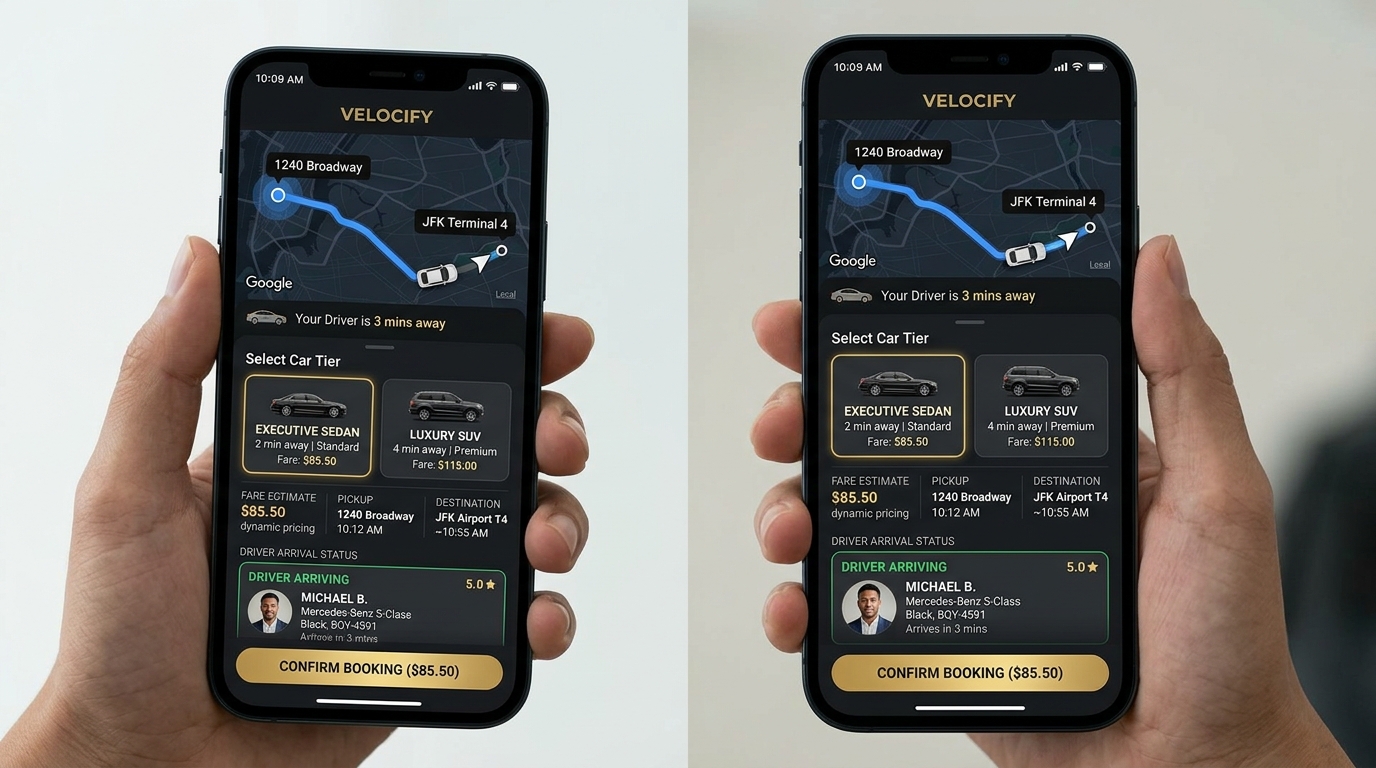
Whether you are launching an on-demand executive chauffeur service, a peer-to-peer car rental marketplace, or an airport transfer booking platform, mobility software requires rock-solid geolocation, reliable real-time state synchronization, and friction-free payment processing. In the past, building a custom mobility system required specialized native engineering teams and six-figure budgets. In 2026, FlutterFlow enables founders and fleet operators to deploy production-grade booking platforms in a fraction of that time.
Core use cases for modern car booking applications
Mobility platforms vary significantly by operational model. In our development practice at KinetixSoft, car booking apps fall into four primary categories:
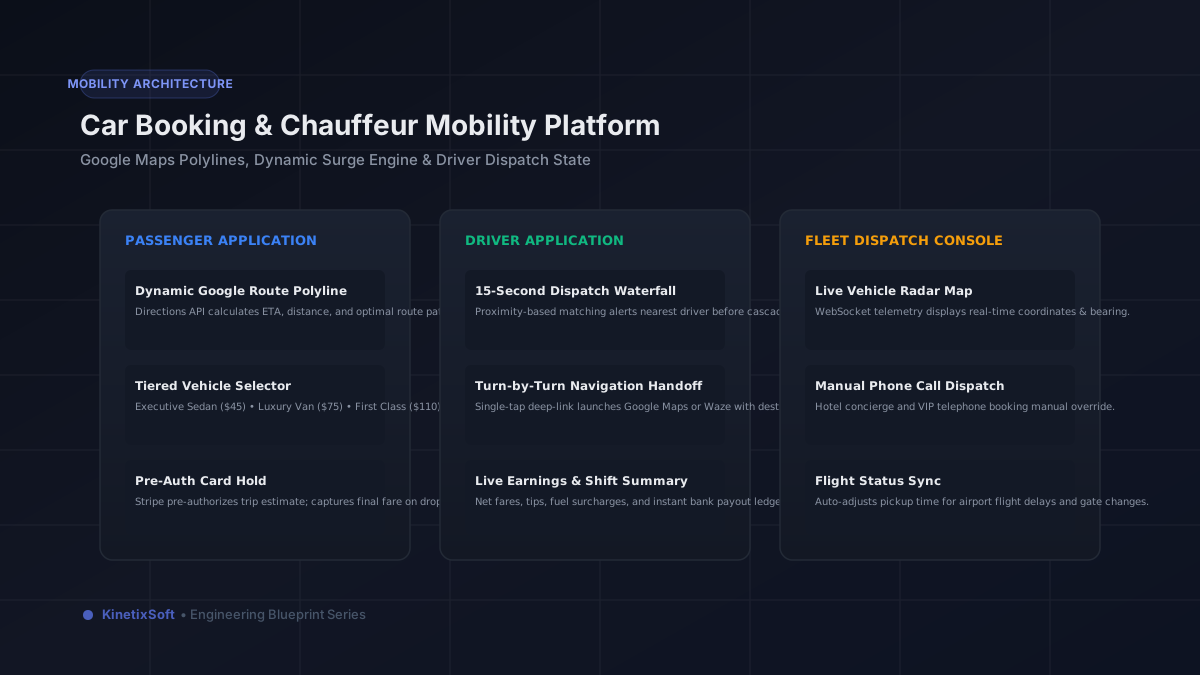
1. Executive chauffeur and airport transfers: Scheduled pickups with luxury vehicle tier selection (Executive Sedan, First Class, Luxury Van), fixed zone-to-zone pricing, flight number monitoring, and automated driver dispatch.
2. On-demand urban ride hailing: Instant driver matching based on geolocation proximity, real-time map tracking, animated car markers, and dynamic peak-hour surge pricing.
3. Vehicle rental and peer-to-peer car sharing: Daily, weekly, or hourly vehicle rentals with identity verification, driver's license validation, security deposit holds, and digital lockbox/keyless pickup instructions.
4. Corporate fleet booking: Internal business portals allowing corporate employees to book pool vehicles with departmental cost-center billing and trip approval workflows.
Key technical features built in FlutterFlow
A commercial car booking platform requires tight coordination between passenger interfaces, driver devices, and administrative dispatchers:
1. Interactive Google Maps integration: We leverage FlutterFlow's native Google Maps component combined with custom Flutter widgets for polyline route drawing, custom vehicle icons, and animated vehicle marker rotation that matches the vehicle's compass bearing.
2. Address autocomplete and reverse geocoding: Integrating Google Places API to allow riders to search destinations with instant autocomplete, pickup pin dragging, and automatic route distance calculation.
3. Dynamic fare calculation engine: Calculating route distances and estimated trip duration via the Google Directions API. The pricing algorithm factors in base fare, distance rate ($/km or $/mile), duration rate, minimum fare rules, and vehicle class multipliers before the passenger confirms the trip.
4. Real-time driver-passenger matching: Utilizing GeoFlutterFire or Supabase PostGIS with ST_DWithin to query active drivers within a 5-kilometer radius. The dispatch algorithm sends notification pings to the nearest driver with a 15-second countdown timer before cascading to the next available driver.
5. Pre-authorization payment holds: Connecting to Stripe or regional gateways (such as Tap Payments in the GCC) to pre-authorize the estimated fare when a trip is requested, capturing the exact final amount once the driver marks the journey completed.
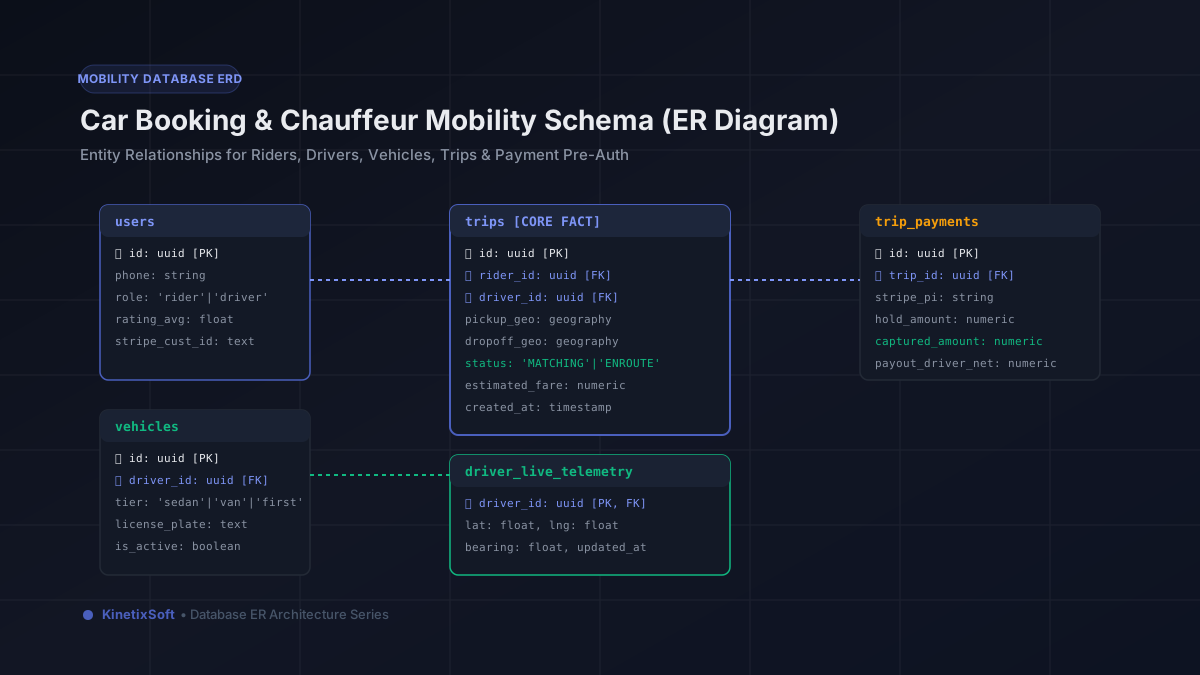
The multi-app architecture: Passenger, Driver, and Admin
A complete car booking ecosystem operates three dedicated interfaces connected to a shared cloud database:
The Passenger App: Designed for rapid booking, saved favorite addresses, payment management, active journey live tracking, driver profile & license plate verification, and in-app tipping.
The Driver App: Built for operational clarity: online/offline toggle, ride dispatch popups with pickup distance and fare estimate, turn-by-turn navigation redirect (launching Google Maps or Waze with single-tap handoff), daily earnings reports, and document management (insurance, vehicle inspection).
The Dispatch & Fleet Dashboard: A responsive web interface (built in Bubble or Retool) allowing fleet managers to view live vehicle positions on a master map, assign manual phone bookings, handle cancellations, and export payroll reports.
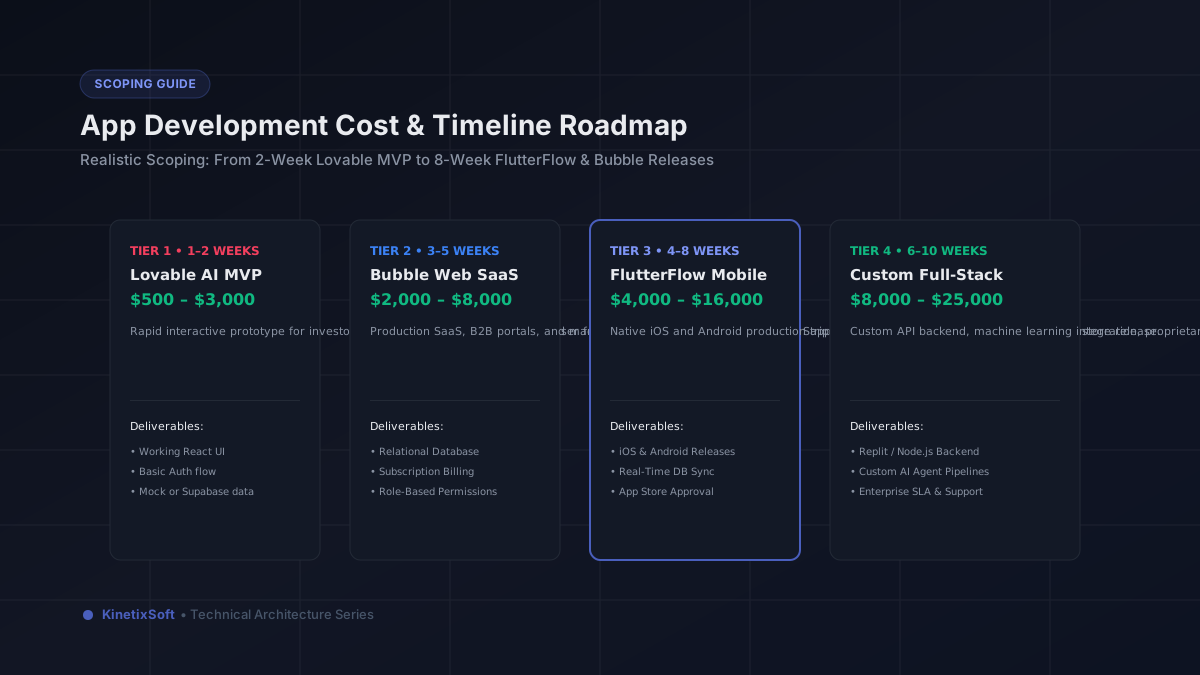
Estimated cost and launch timeline
A native Swift and Kotlin mobility build typically requires $70,000–$140,000 and 6 to 9 months of development. By leveraging FlutterFlow's unified codebase connected to Firebase or Supabase, KinetixSoft builds complete passenger and driver applications for $8,000–$18,000 within 6 to 9 weeks.
Planning to build an on-demand ride hailing or car booking platform? Book a technical scoping session with our mobility engineering team.
Planning to build an app like this?
KinetixSoft designs, builds, and launches production-grade mobile and web applications on FlutterFlow, Bubble, Retool, Lovable, and Podio. We deliver 40–60% faster and more affordably than traditional agencies.
Book a Free Scoping CallRelated Guides & Articles
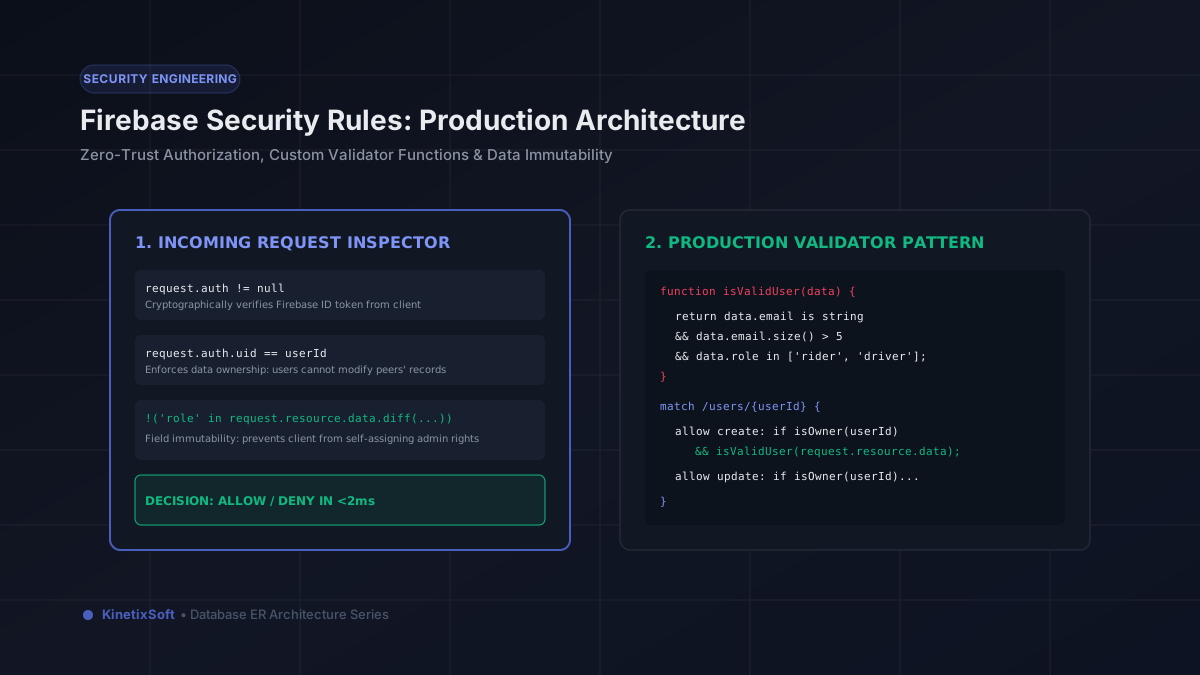
Mastering Firebase Security Rules in FlutterFlow: Complete Production Implementation Guide
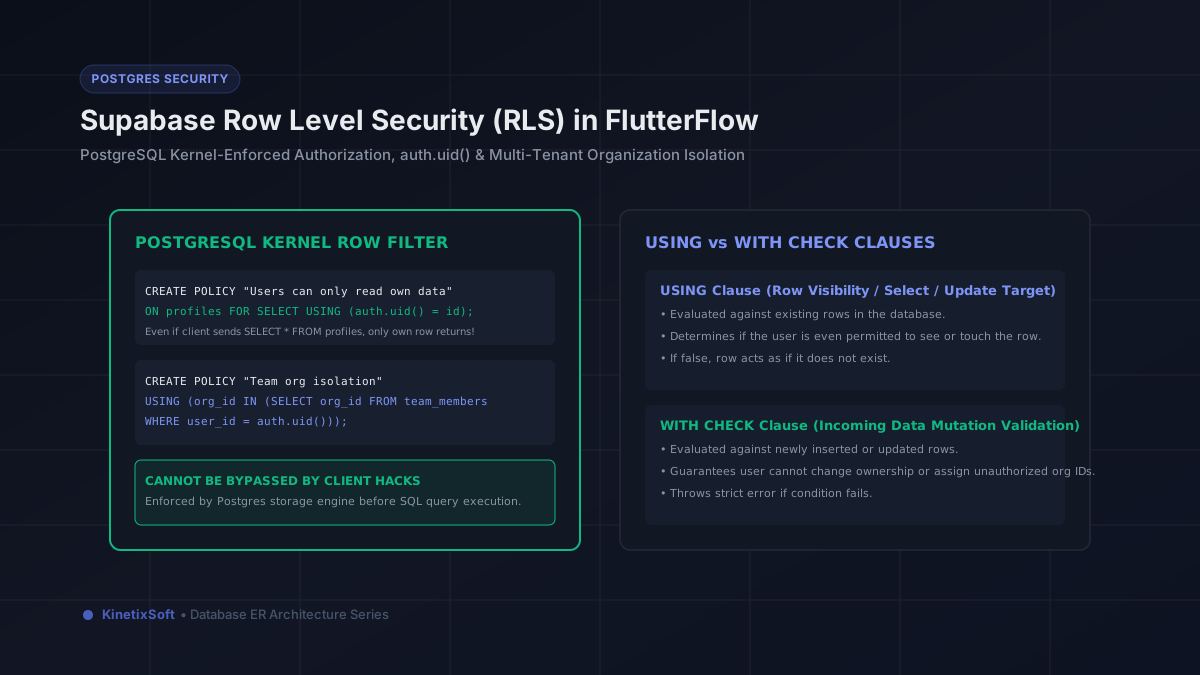
Supabase Row Level Security (RLS) in FlutterFlow: The Comprehensive Engineering Guide