The Future of Low-Code Development

How platforms like FlutterFlow and Retool are changing development forever — and why the hybrid approach wins.
Low-code isn't replacing engineers
The narrative that low-code eliminates the need for developers has been wrong every time it's been repeated. What low-code platforms actually do is change which parts of development require engineering expertise and which don't.

The hybrid approach is winning
The teams shipping the best products right now aren't using low-code instead of engineering — they're using low-code for the parts where it excels (UI, workflow, CRUD operations) and proper code for the parts where it doesn't (complex business logic, custom integrations, performance-critical paths).
AI is accelerating both sides
AI is making traditional code faster to write and making low-code platforms smarter. The delta between what an experienced developer can ship in a month and what a junior developer can ship is compressing. That's a net positive for everyone building products.
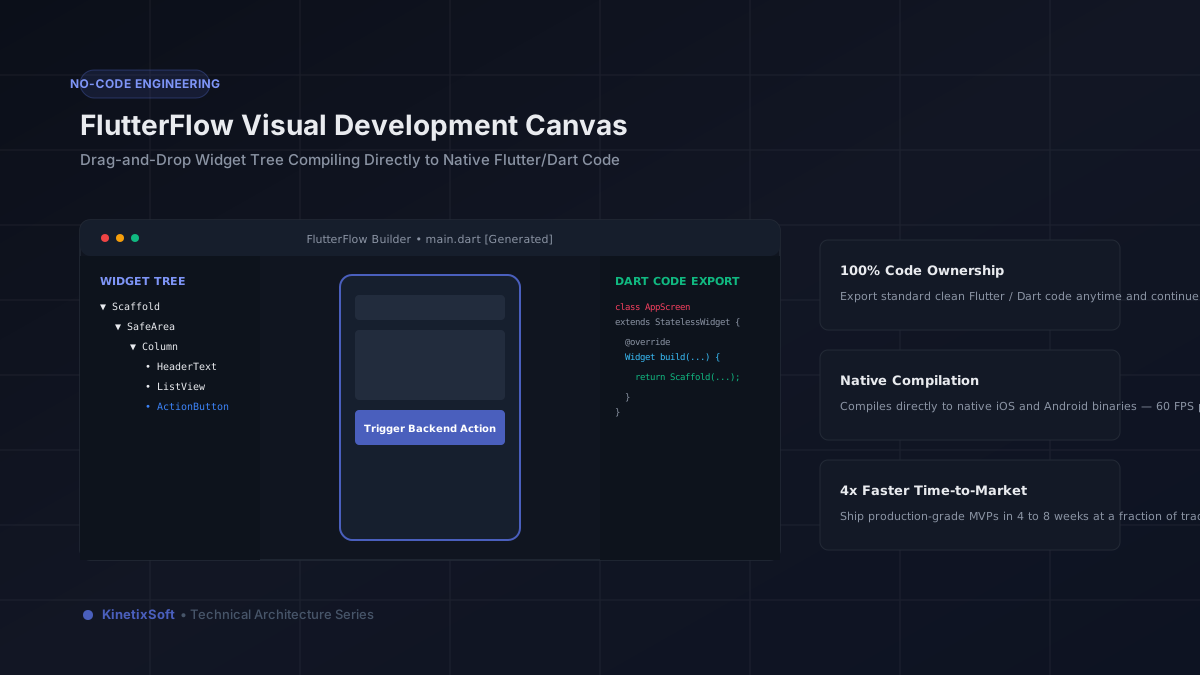
Platform maturity is the real story
The reason FlutterFlow and Retool are worth taking seriously isn't that they're low-code — it's that they're mature. They've been used in production by real teams, the edge cases are documented, and the failure modes are known. That's a different risk profile than "experimental."
Related Guides & Blueprints
Introduction to Low-Code Development & FlutterFlow Overview (2026 Guide)
Top 5 Best FlutterFlow App Development Companies in 2026 (Ranked & Reviewed)